

Executive Summary
Most surveys on artificial intelligence poll the general adult population. This one samples 2,840 registered voters who Verasight has verified as voters using commercial voter files. This also lets us break out opinions by whether someone participated in the 2024 primary and general elections. In our new survey, voters are more in favor of government regulation for, and more skeptical of, AI than non-voters, while Democrats are the most worried about AI’s impacts on employment, and Republicans see more upside in the technology than other voters.
Overall, the survey finds the public is skeptical of AI’s benefits, broadly supportive of government oversight for the new technology, and largely convinced that AI will cost people jobs. Views on whether AI will improve daily life are more mixed. We found similar levels of pessimism among the general public in our January report on Americans’ adoption of AI tools.
A full interactive dashboard for this polling data is available on Verasight’s website here.
1. Benefits vs. harms
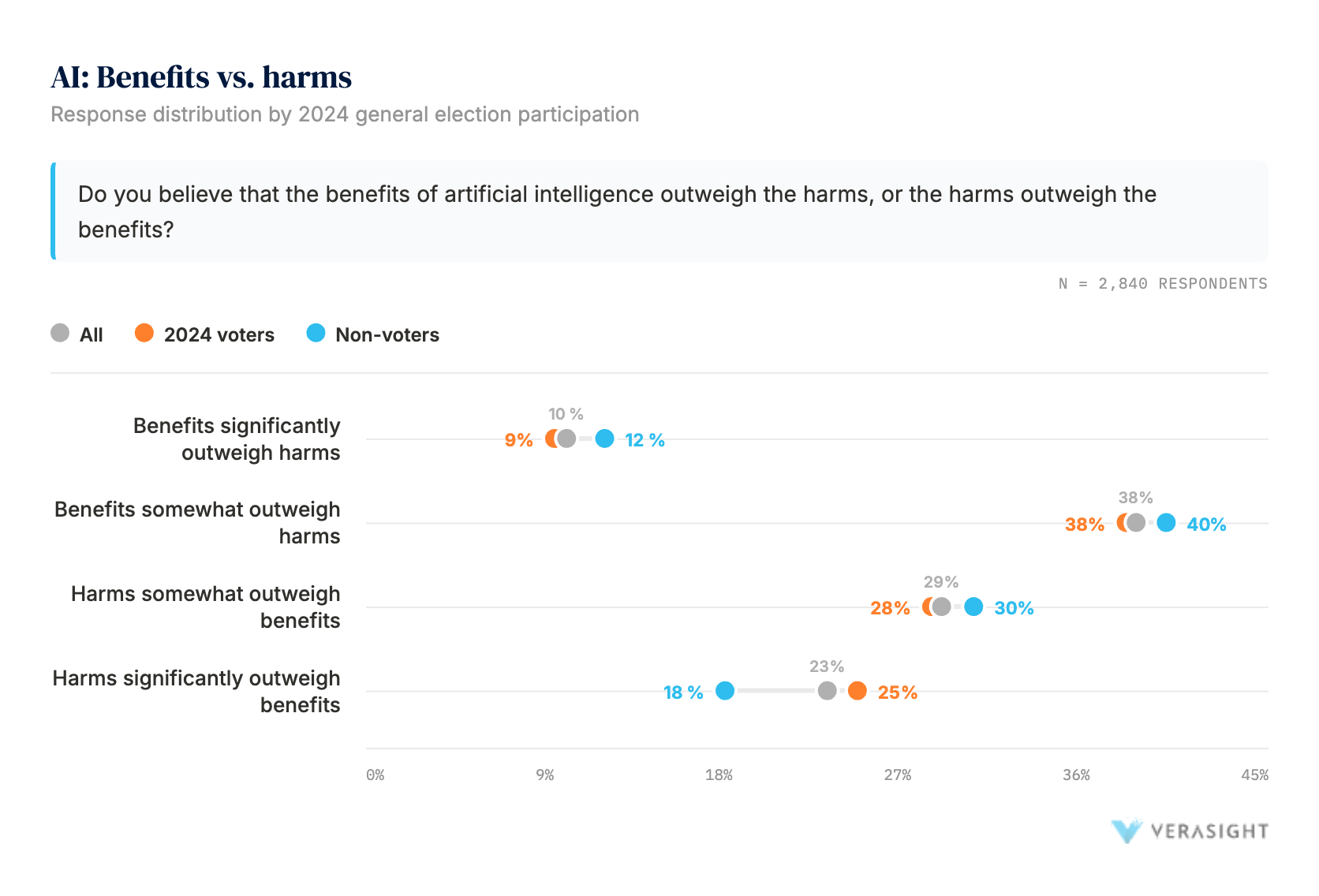
We asked respondents whether the benefits of artificial intelligence outweigh the harms, or vice versa. Overall, 48% said benefits outweigh harms (10% significantly, 38% somewhat), and 52% said harms outweigh benefits (29% somewhat, 23% significantly).
Republicans are slightly more likely than Democrats to say benefits outweigh harms (53% vs. 43%), with Independents in the middle at 49%. The gender gap is somewhat larger: men are at 54% benefits, women at 44%. College graduates are a bit more positive (54%) than those with a high school education or less (43%).

2024 general election voters lean slightly more negative than non-voters on this question: 47% of voters say benefits outweigh harms, compared to 52% of non-voters. The same pattern holds for primary voters (47% vs. 50% for non-primary voters).
2. AI regulation
This generalized anxiety about the potential impacts of AI translates to broad support for regulation of these new tools. Overall, 57% of respondents say AI should be significantly regulated by the government, and another 34% say some regulation is needed. Just 9% of U.S. voters prefer minimal regulation for AI tech.
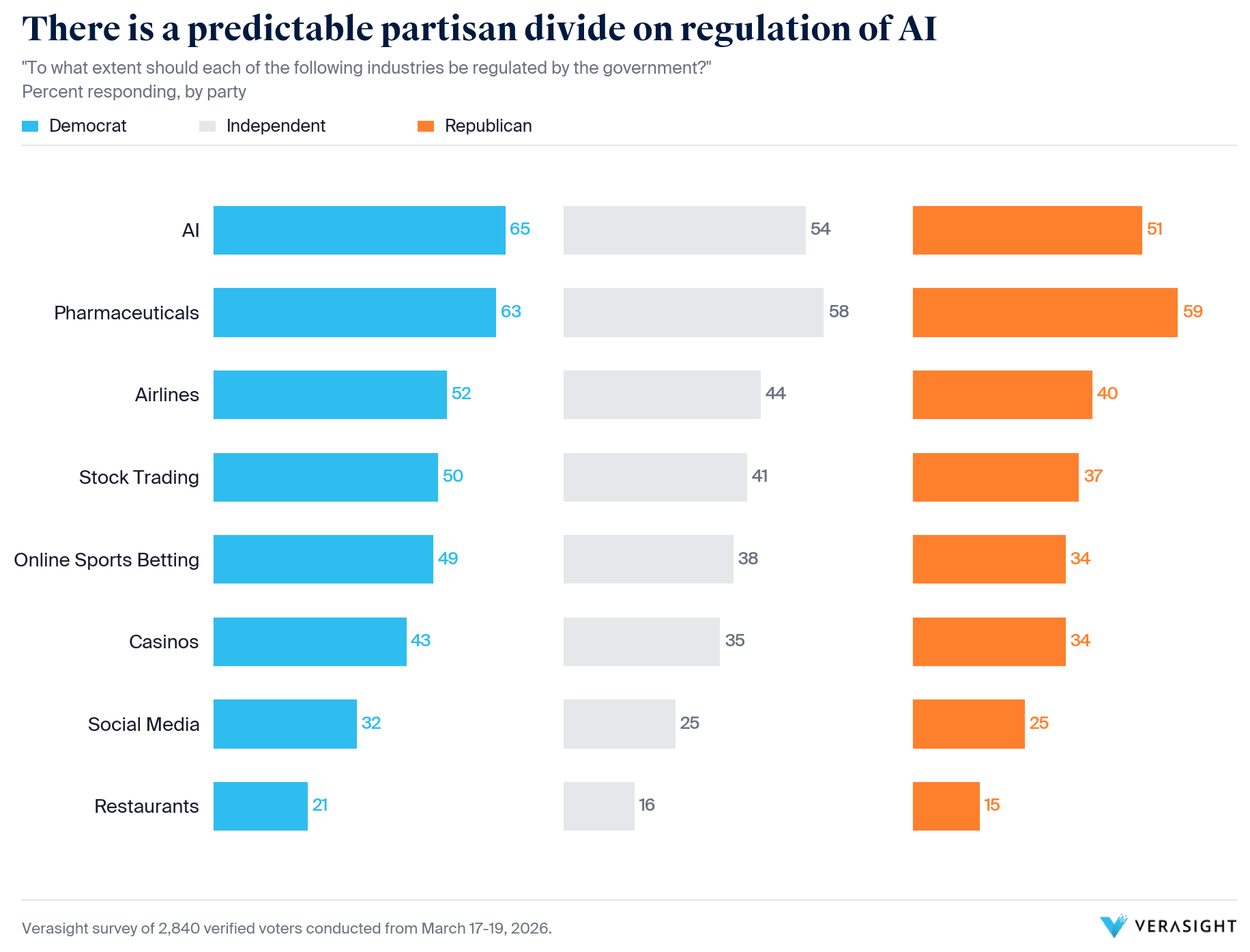
There is a predictable partisan divide on the topic of regulation. Democrats favor “significant regulation” of AI at 65%, compared to 54% of Republicans and 53% of Independents. The only other industry where a majority of Republicans favor regulation is for pharmaceutical companies.
Among primary voters specifically, 71% want significant regulation – the highest of any group in the survey. Confirmed general election voters are also more pro-regulation than non-voters: 59% vs. 50%. In general, the more politically engaged someone is, the more likely they are to favor AI regulation.
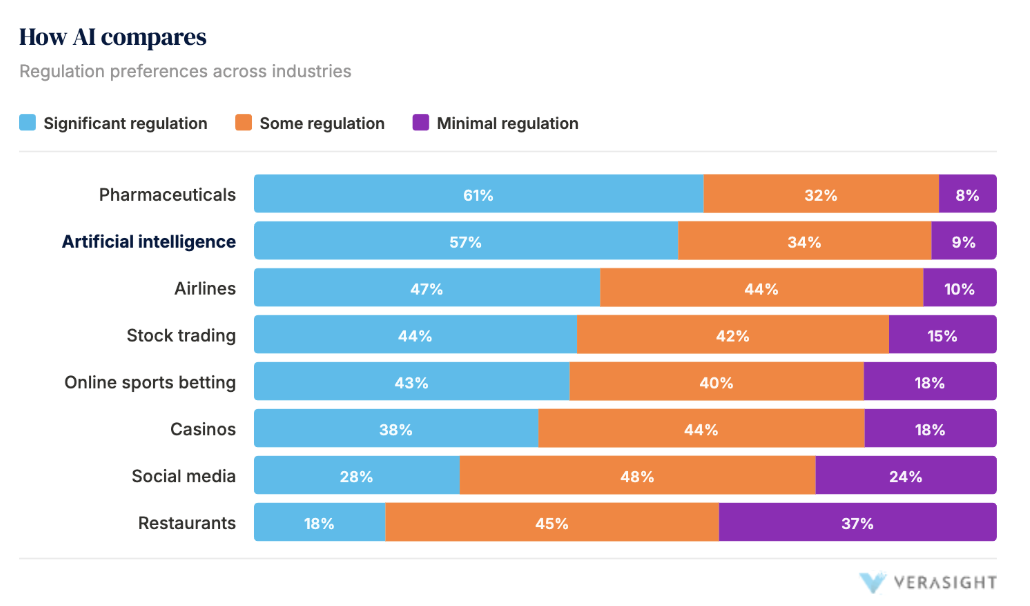
We also asked how people feel about regulation across several industries. AI came in second, behind only pharmaceuticals, in the share wanting significant regulation:
The industry comparison is worth sitting with. Social media – which has been the subject of Congressional hearings and years of public debate – comes in well below AI, suggesting people see AI as posing a different, more serious kind of risk. Support for AI regulation is higher than for casinos, sports betting, and stock trading.
3. Who should be responsible for AI safety?
Respondents were asked who should be primarily responsible for the safety of AI. The results were split three ways: 43% said the companies developing the technology, 28% said the government, and 26% said an independent third-party body. Four percent chose “other.”
The breakdown looks fairly similar across party lines – Democrats, Republicans, and Independents all put companies first (41%, 43%, and 43% respectively). Democrats are somewhat more likely to name the government (33% vs. 29% for Republicans), while Independents are slightly more likely to favor a third-party body (28%).
Age shapes this question more than party. Younger respondents (18-29) are more likely to say companies should be responsible (47%), while older respondents (50-64 and 65+) are more likely to prefer an independent third-party body (32%) overseeing AI advances. Confirmed primary voters are notably more likely to prefer a third-party body than non-primary voters (31% vs. 23%) and less likely to trust companies (37% vs. 46%). It is possible that more engaged voters are less trusting of the companies developing AI systems, and don’t want them “regulating” themselves.
4. AI and unemployment
78% of respondents agree that AI will lead to an increase in unemployment – 35% strongly and 43% somewhat. Just 23% disagree. This is similar to the results of our January report, when 7-in-10 U.S. adults said AI tech would decrease the number of (human) jobs in the U.S.
Democrats are more likely to agree than Republicans (81% vs. 74%), though the gap is modest compared to some other questions. Women agree at a slightly higher rate than men (80% vs. 76%). Those with a high school education or less are more likely to “strongly agree” (39%) than college graduates (30%), even though overall agreement rates are similar.
Voter status doesn’t change the picture much here – general election voters (78%) and non-voters (78%) are almost identical, as are primary voters (79%) and non-primary voters (78%).
5. AI improving daily life
51% of respondents agree that AI will improve their daily life (10% strongly, 41% somewhat), whereas 49% disagree (26% somewhat, 23% strongly) and think AI will make daily life worse. This is the most evenly split question in the survey, reflecting some deep skepticism about the impact of AI tech on our shared future.
Notably, voters are not split by party affiliation much on this question: Democrats, Republicans, and Independents are all within a few points of each other (48%, 53%, and 51% agreeing, respectively). Gender and education are more predictive: men agree at 57% vs. 45% for women, and college graduates agree at 59% vs. 44% for those with a high school degree or less.
But there is a notable intensity gap, with strong pessimists outweighing optimists across demographic groups.
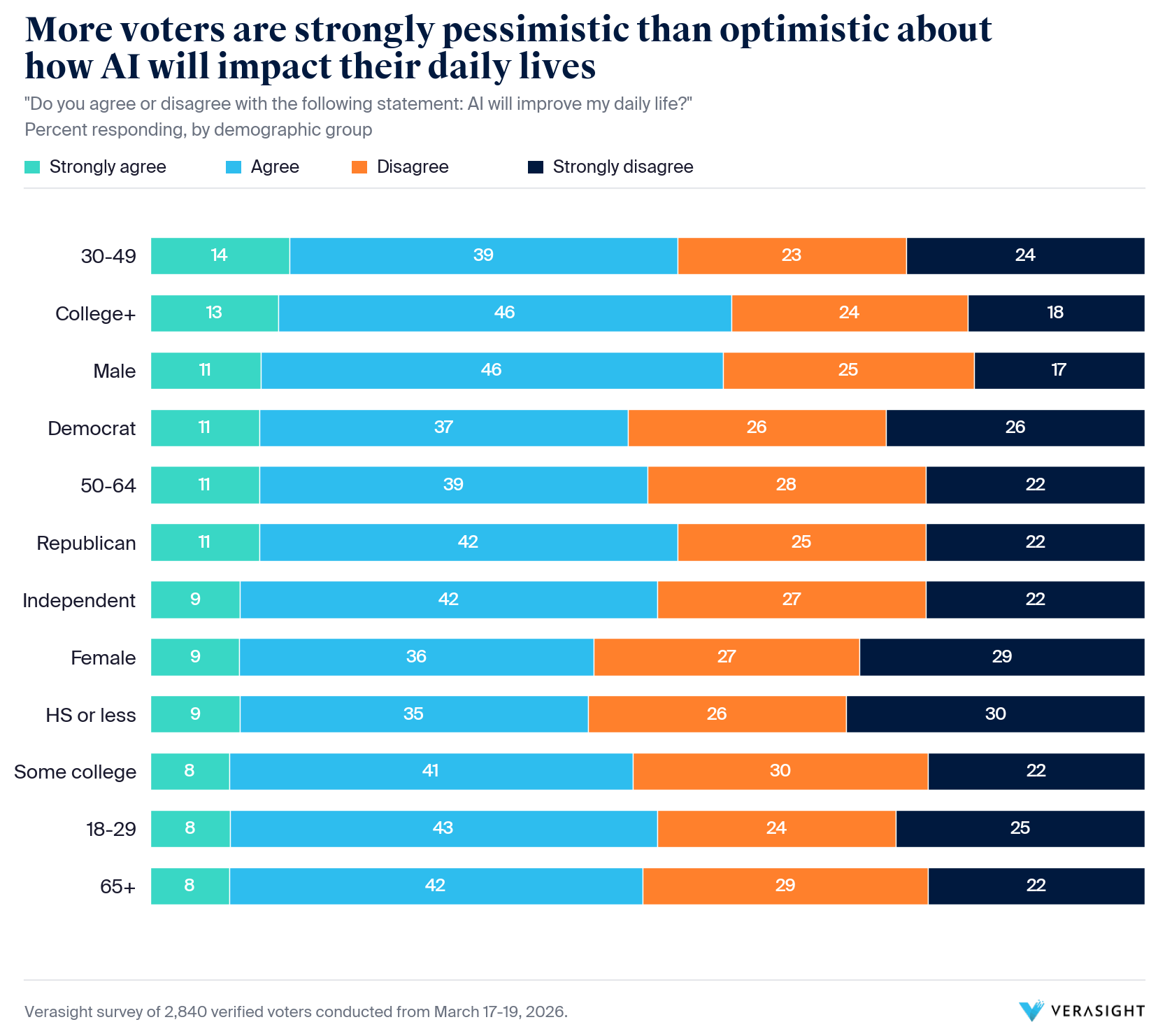
U.S. voters without a college degree are the most likely to strongly disagree with the statement “AI will improve my daily life.”
Discussion
A few things stand out across these results.
First, the voter gap on regulation is meaningful. Across multiple questions, confirmed voters – and especially primary voters – are more skeptical of AI and more supportive of oversight than non-voters. Since these are the people who actually elect legislators, polls of the general public may understate the regulatory pressure that politicians face from their actual constituents.
And while support for regulation is broad, the partisan edge is large — and timing of this year’s midterm elections matters for policy. Both parties favor some regulation, but Democrats favor significantly more intensity, and the Democratic primary electorate is especially pro-regulation. Given that AI policy is moving through legislatures in both parties, these gaps will shape what kinds of proposals gain traction and when.
Third, concern about job loss is the one area of genuine cross-cutting consensus. At 78% agreement, it’s the strongest and most demographically consistent finding in the survey. Voters and non-voters of all parties, ages, and education levels agree in their anxiety about how AI will impact employment trends.
Finally, the personal benefit question is where the overall negativity softens somewhat. People are roughly split on whether AI will improve their own daily lives, even while negativity is felt more intensely than positivity. Gender and education matter also significantly here, which may reflect real differences in what kinds of work AI is likely to affect, and how.